Ita
Ita





The swimming pool in the garden for private use
Characteristics, properties and configurations of the space
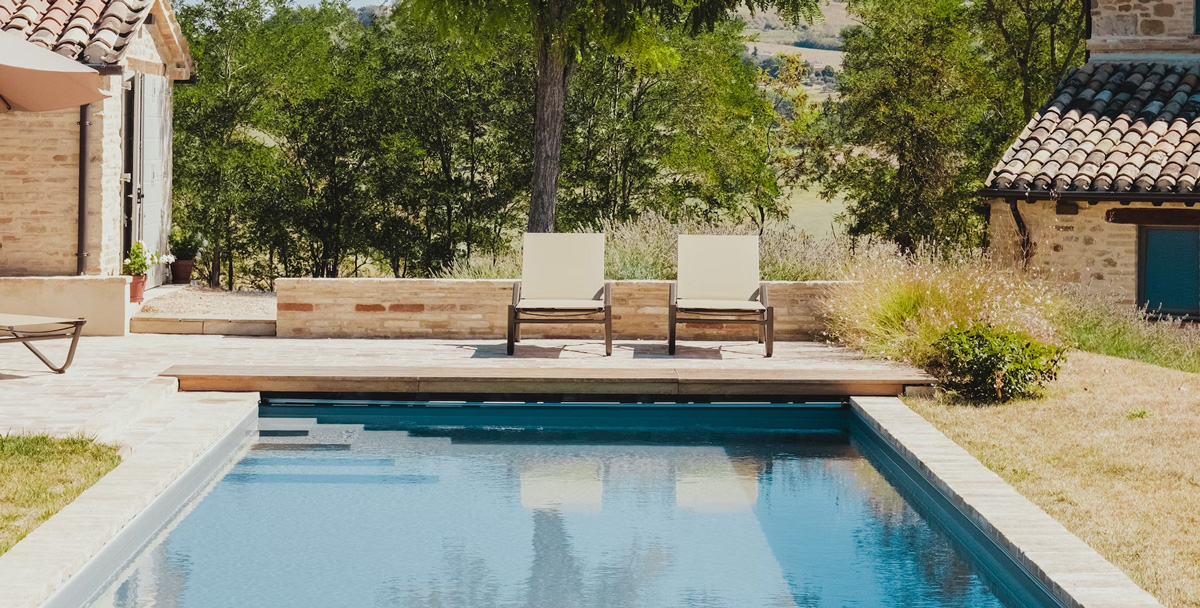

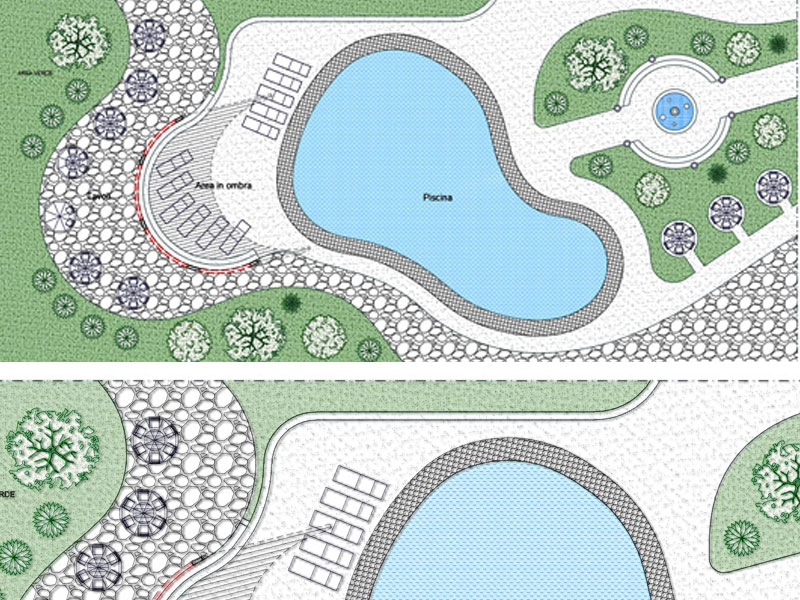
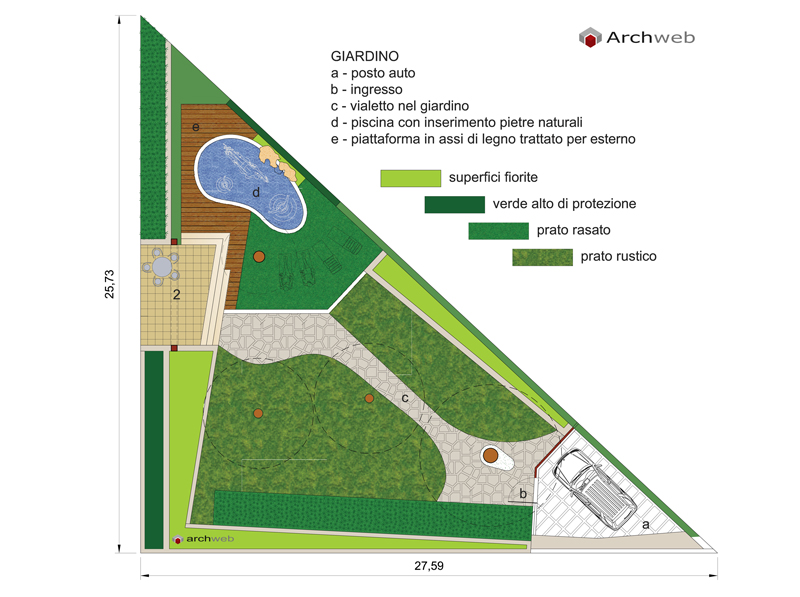
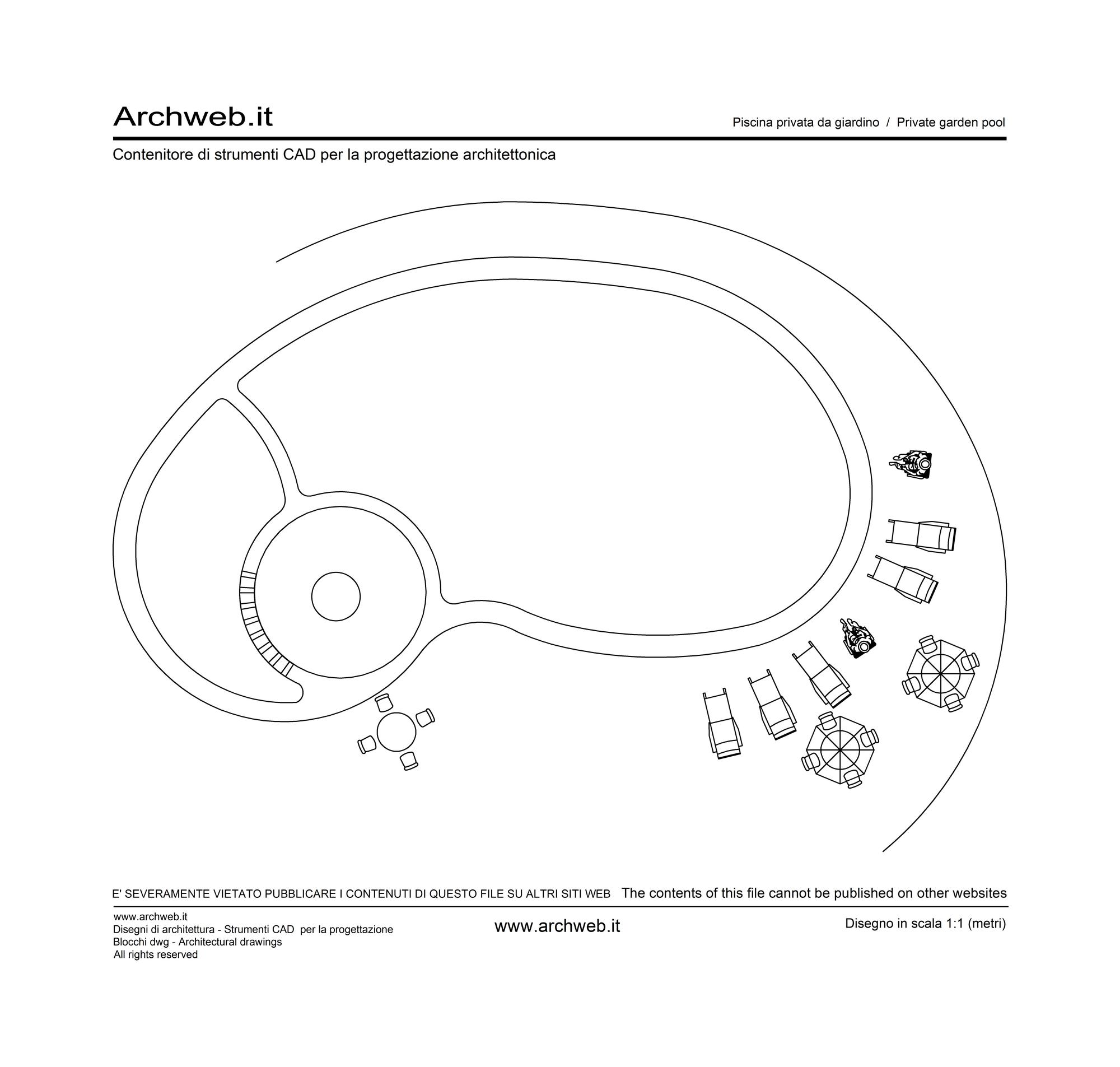
When designing a swimming pool in the garden for private use, the fundamental precautions are in terms of position, size and shape as needs vary.
When positioning a swimming pool, it is necessary to ensure that it is sheltered from the prevailing winds, possibly close to the kitchen to be able to supervise the children and the living room in which it can become a suggestive backdrop. When designing the surrounding greenery, it is good practice to use evergreen vegetation, as deciduous leaves could damage the system.
A swimming pool in principle must have a minimum width of 2.5 m and a length of at least 5.25 m.
TYPOLOGY
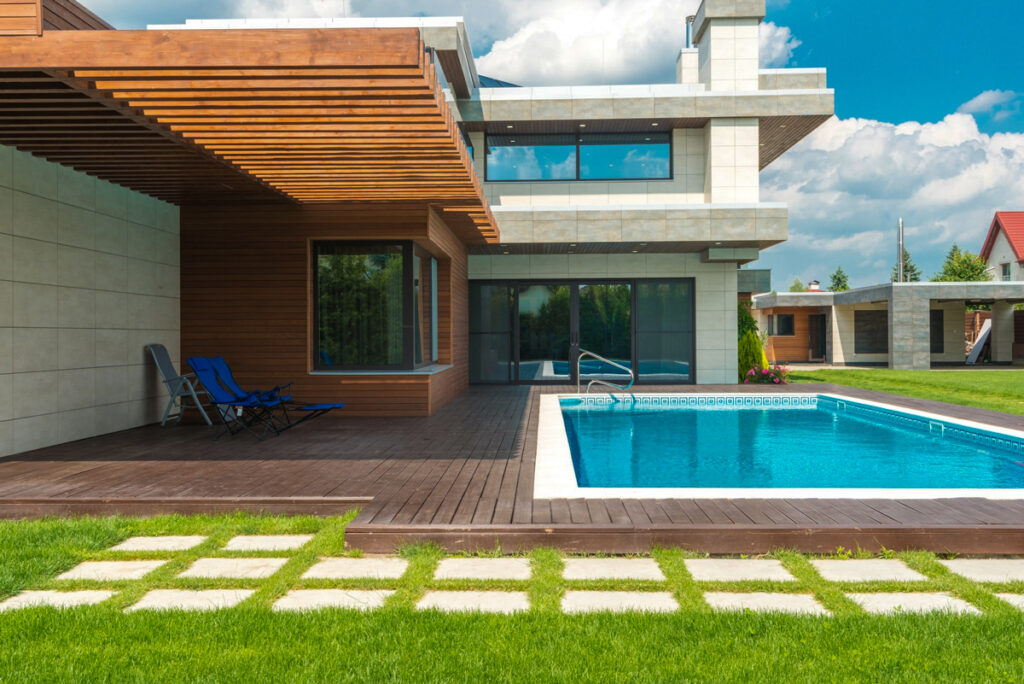
Based on the type of function attributed to the swimming pool we can have different conformations of the same which will be different depending on the shape, size and depth depending on whether it is:
- Competitive activity
- Fun and recreational activity
- Diving and underwater activities
- Rehabilitative, educational and spa uses, through
- Specialist health check
- Multifunctional, i.e. it allows the simultaneous use of different activities and uses
- For children (reduced depth)
To ensure hygiene, swimming pools for public use are equipped with a filtration system which, through the use of chemical products, helps maintain the bathing level of the water; they are also equipped with a system to heat the water and always keep it at the same temperature.
PRIVATE POOLS
When creating a swimming pool project, the area in which it is inserted must be taken into account by considering:
GENERAL FACTORS
- Type of Fruitori
- Shape (square, circular, irregular)
- Depth
- Color
TECHNICAL FACTORS
- Pressure drops in the recirculation system
- Filtration times
Based on the type of swimming pool to be built, whether for recreational or competitive purposes, we can distinguish it based on the material it is made of. Swimming pools are generally built in:
- Reinforced concrete
- Prefabricated steel
- Prefabricated panel
Waterproof concrete tank, (double-layer cast-in-place, single-layer broken concrete, precast elements)
In general, concrete structures require greater attention during construction than other types.
In this case, a concrete slab of approximately 15-20 cm will first be built with walls of the same material. This structure will then be covered with a specific finish which can be chosen based on both aesthetic and functional aspects.
The internal lining of the swimming pool can be made of plastic, ceramic or water-resistant paints and plasters which allow you to create a waterproof, resistant but at the same time flexible and elastic film.
There are different types on the market, with different colors and finishes.
Less frequent is painting, for example in chlorine rubber, colored cement-based coatings. In all cases, however, it must have precise standards to guarantee correct stress on the water pressure, it must be non-slip and resistant to chemical products for cleaning and water hygiene.
Polyester tub, this type is very rare and is generally used as prefabricated; it is rarely made on site. In most cases, this type is not self-supporting and requires support like lean concrete.
Pool with waterproof coating, which includes a load-bearing structure in masonry, concrete, steel (also above ground) or underground.
The above ground swimming pool
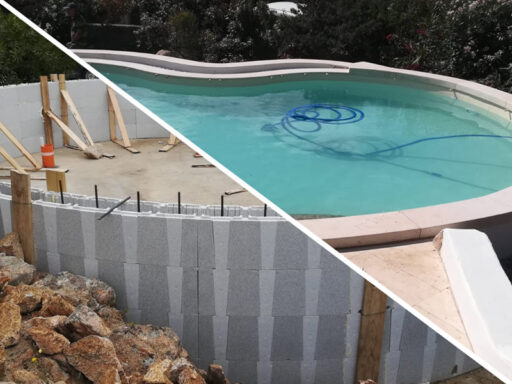
Above ground swimming pools represent an alternative which involves construction work which is not too demanding (excavation). Generally this type is mostly used to build small swimming pools. The advantage of an above ground swimming pool is represented by both the extremely fast construction time and reduced costs compared to in-ground ones, also considering that they have standardized dimensions and shape.
In the case of the construction of removable above ground swimming pools, the advantage is ensured in terms of reduction in the time required to complete the authorization procedures, which are mandatory for types of fixed structures.
However, it is good practice to evaluate the specific regional and municipal regulations regarding the request for authorization such as DIA or Building Permit.
The cheapest option is the removable above ground pool as it is made up of a load-bearing steel structure that supports a sheet resistant to both chemical agents and UV rays.
As a more robust and durable option you can opt for a wooden or steel swimming pool, although more expensive than the PVC one.
The in-ground swimming pools
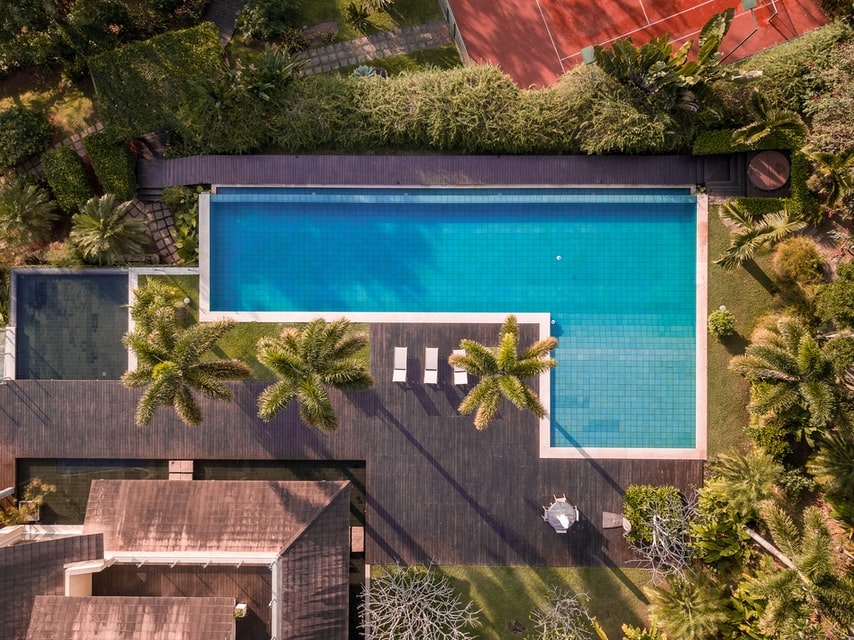
In-ground pools can be customized in shape and depth, in this case they have higher costs in terms of construction and require invasive work compared to above-ground ones.
In fact, it is a substantial change to the property and as such requires authorization from local authorities who define the principles and details for issuing the concession.
Underground can have different types of coating which varies based on the aesthetic appearance in relation to the color and finish of the materials which give the water a certain reflection and therefore influence the final result.
FLOORING and BORDER
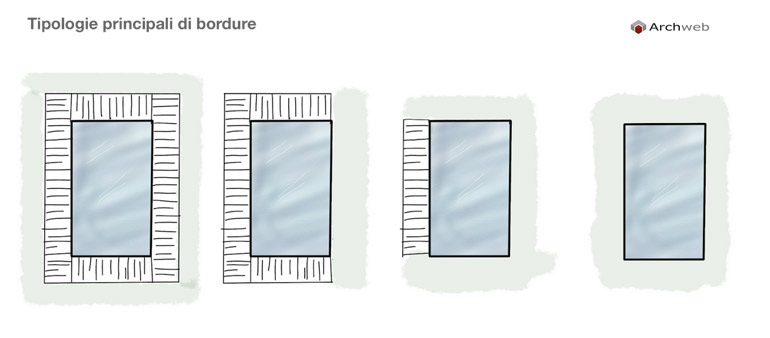
When building the swimming pool, particular attention must be paid to the construction and design of the external flooring now. This has the task of respecting the hygiene requirements for cleaning it and safety in terms of anti-slip.
There are various solutions on the market such as:
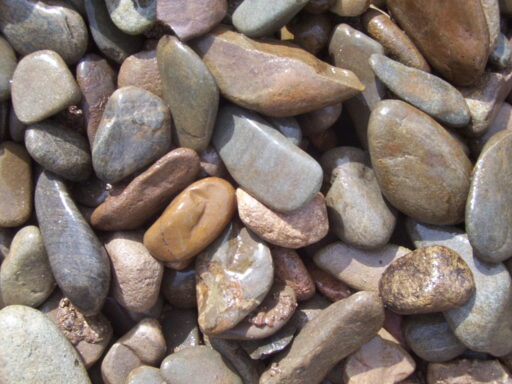
- Wood
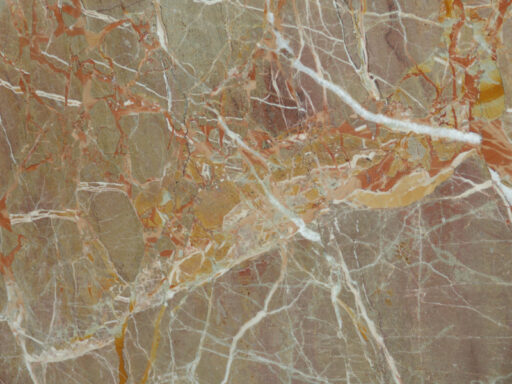
- Marble
- Natural stone
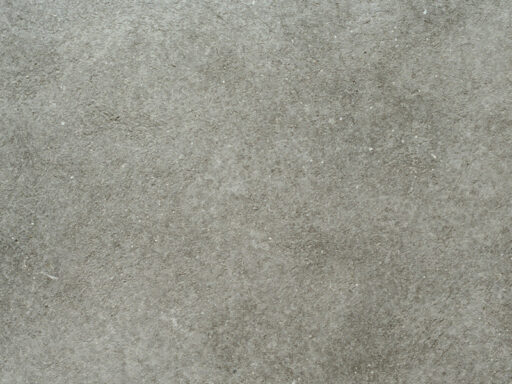
- Cement
- Ceramic and terracotta
Ceramic, also following modern pre-printed materials, is able to aesthetically emulate any finish whilst guaranteeing adequate hygiene standards for surface cleaning and safety in relation to the roughness of the tile surface.
Below is a useful diagram for a more informed purchase.
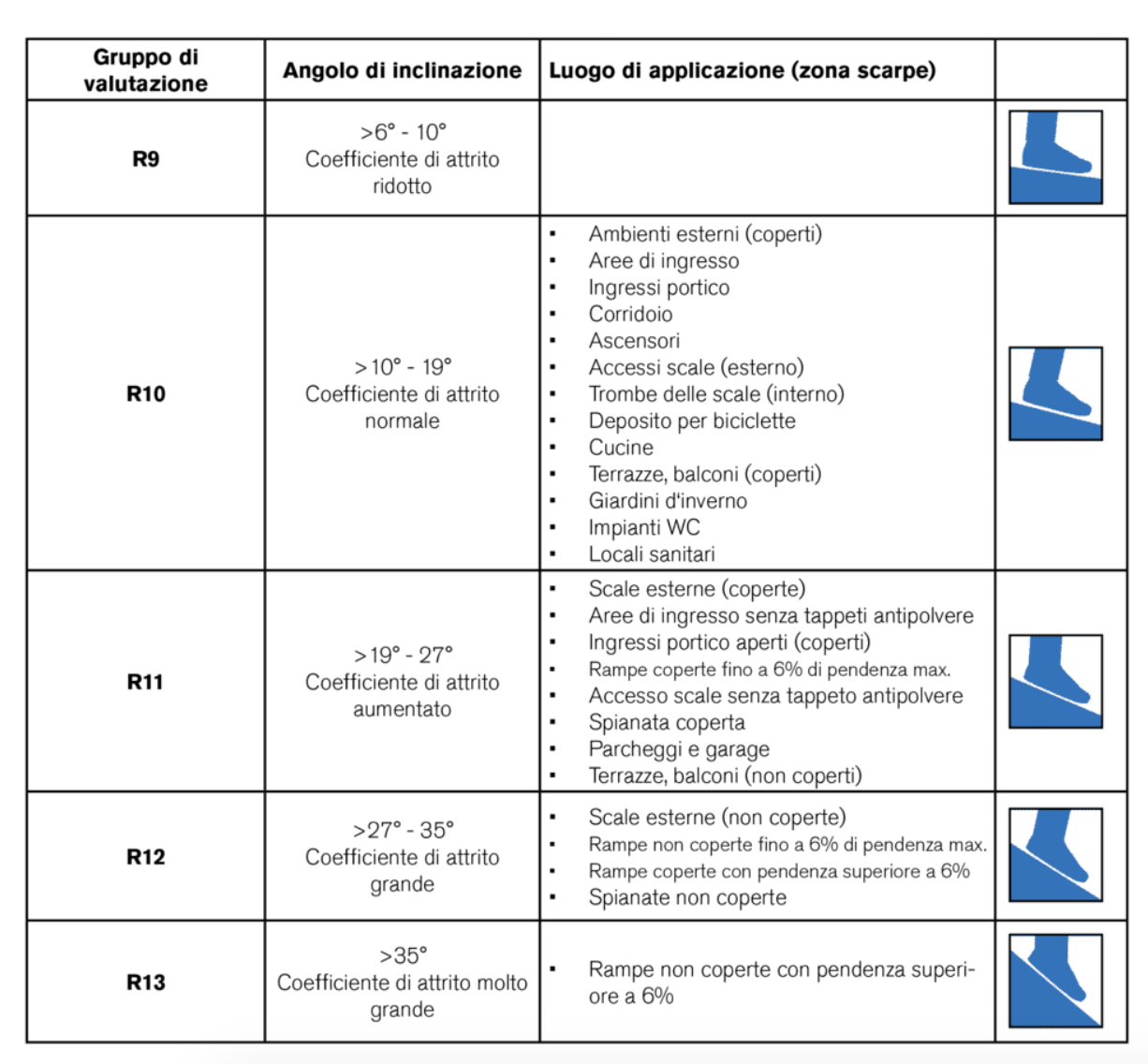
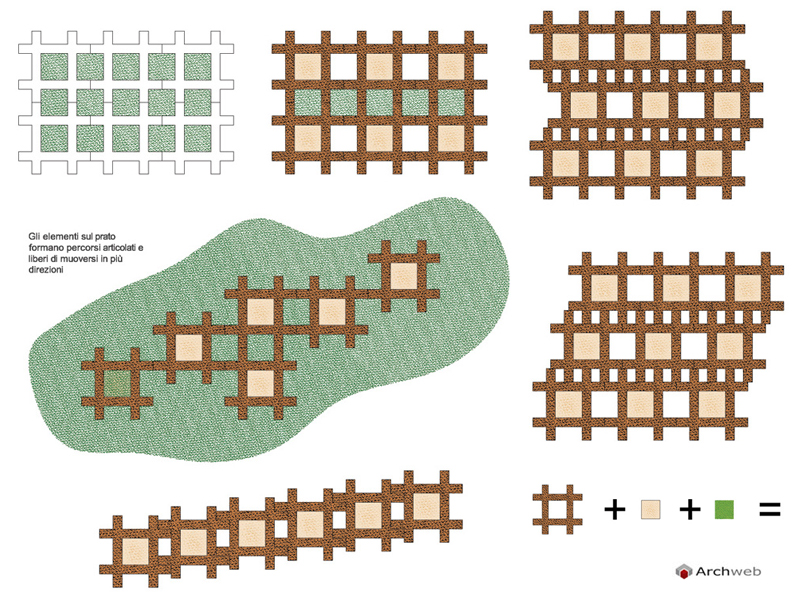
The flooring solutions from an aesthetic point of view are different and vary greatly depending on the manufacturers, whether ceramic or wood.
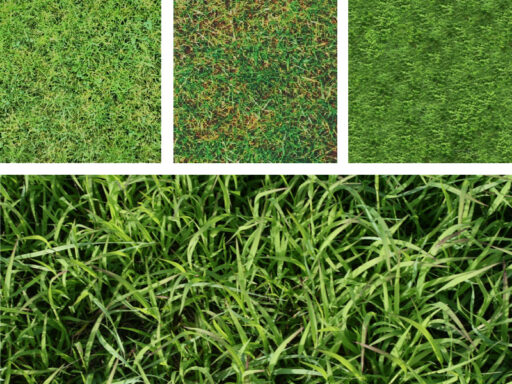
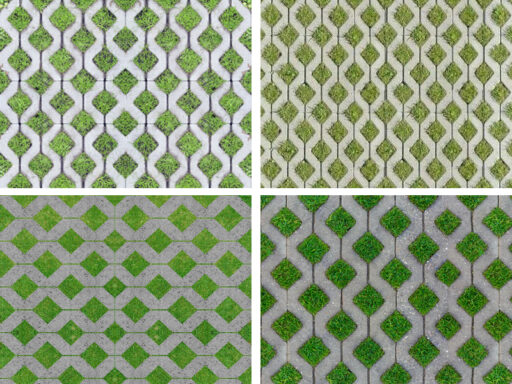
The border can also be created with a grassy layer, in this case it is necessary to take into consideration when choosing the species both the chemical agents contained in the water, which could damage the herbaceous vegetation, and the frequency of use of the swimming pool.
SHAPES, DIMENSIONS AND DEPTH
Depth
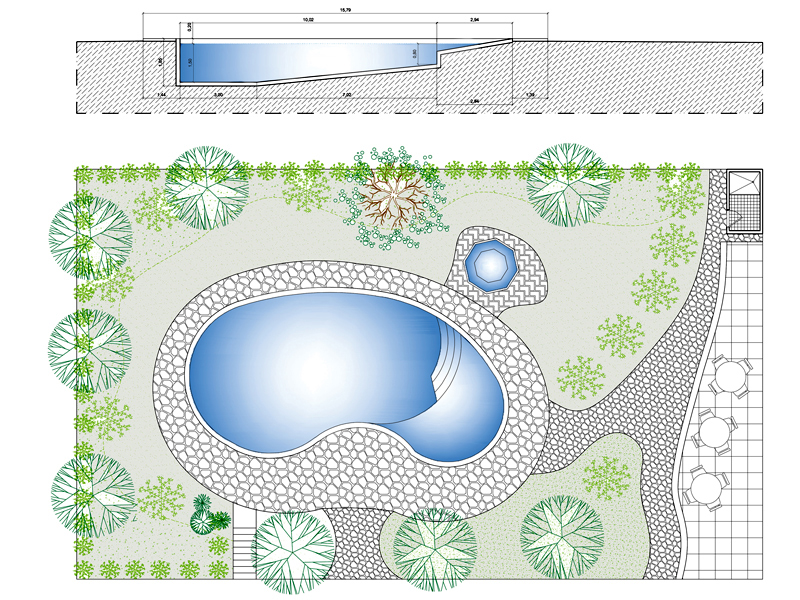
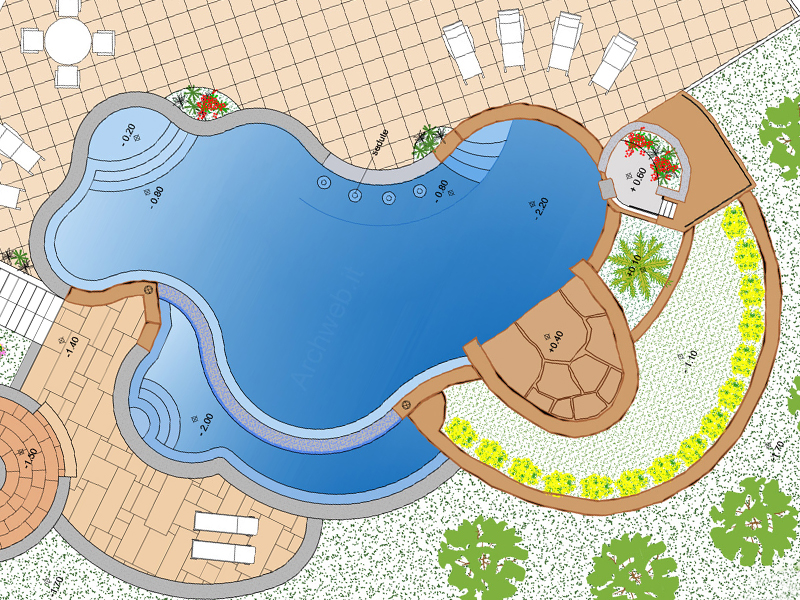
The depth and type of shape of the pool bottom vary based on its perimeter shape; generally we can find four types of fund:
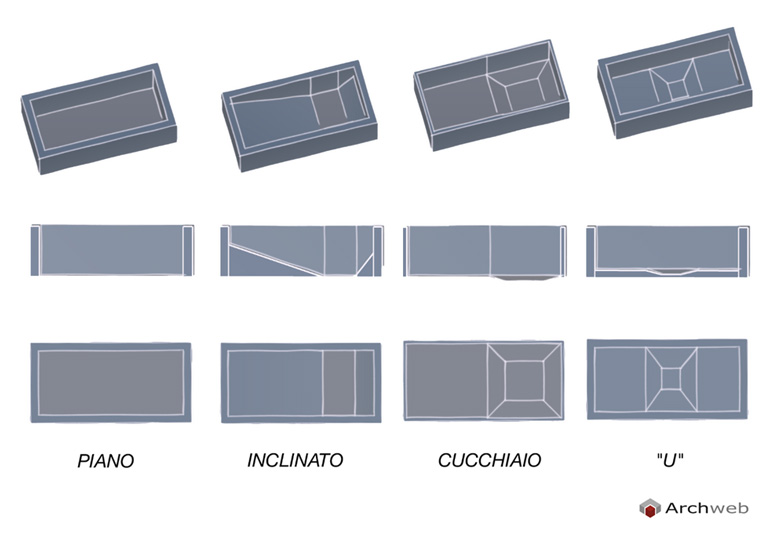
Flat, meaning the entire surface has the same depth
Inclined, in this case the depth begins with approximately 50 cm, sloping further and progressively until the desired depth.
Spoon-shaped, this type is used to facilitate dives and guarantee greater depth on one of the two sides with a greater depression than the other.
“U” shaped, where the deepest part is in the centre.
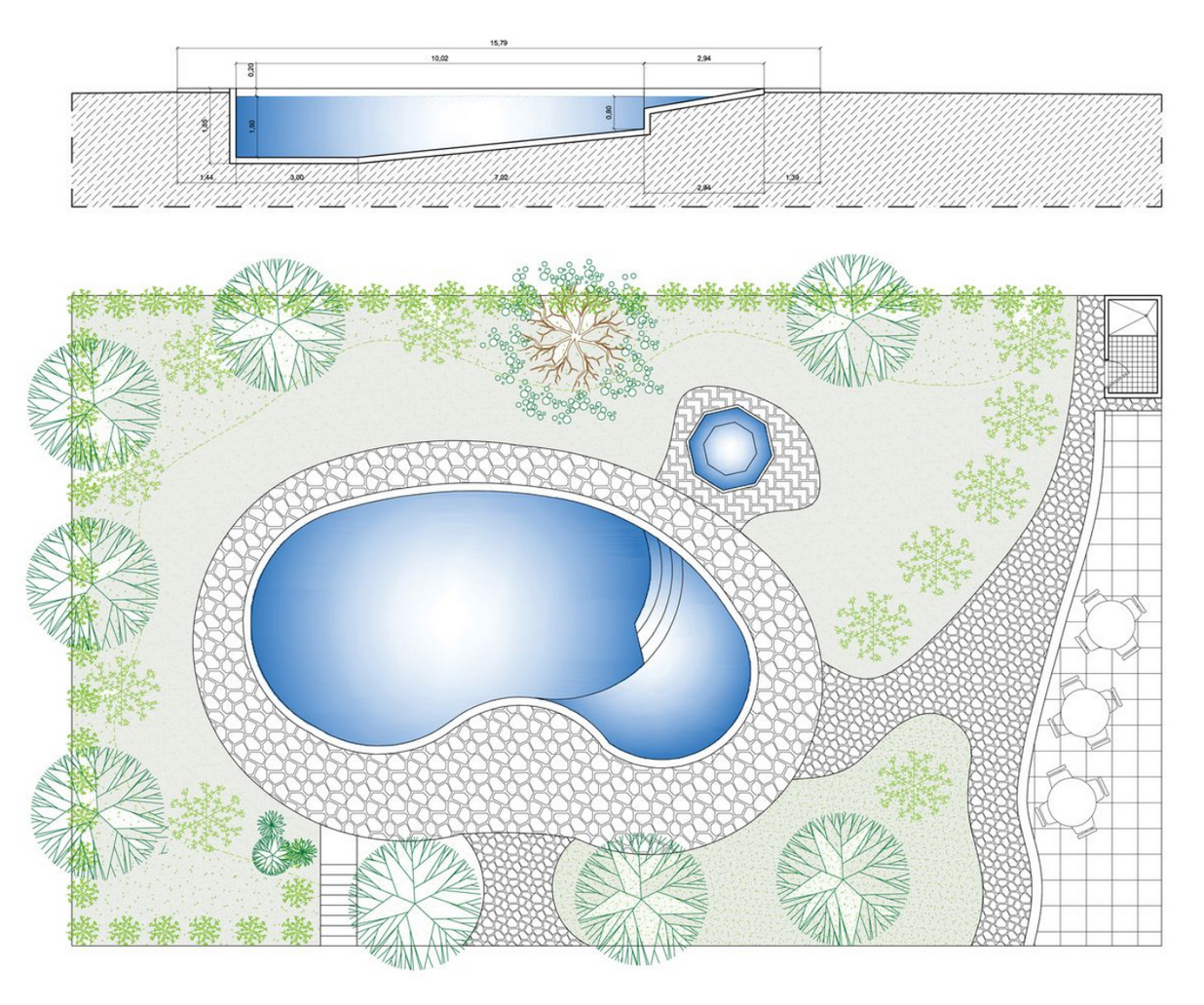
FILTERING, MAKE-UP AND RENEWAL WATER SYSTEMS
In the design of the swimming pool, the water filtering and purification system plays an important point to which maximum attention should be paid.
It is necessary to guarantee correct water recirculation, regular emission with good cleaning of the surface of the tank using a skimmer or overflow channel.
For filtering, however, we can use gravel (depth filter with fan for washing air), diatomaceous earth, surface filter and foamy synthetic material.
To eliminate algae, chemical products such as chlorine or chlorine-free products such as copper sulphate can be used.
References: Architect’s Manual
Cover photo: Bernard Hermant on Unsplash
© Archweb.com all rights reserved – It is possible to share with a link to the page