
 Ita
Ita











































Design categories Construction details
Curtain wallDivider panelsDoors and windowsExpansion jointsFacade coatingsFloating floorsFoundationsGlass bricksGlulam structuresManeuverable walls - movableMetal corrugated sheetReinforced concrete structuresRetaining wallsRoofsScrews - Bolts - Dowels - AnchorsShelters to protect doorsSkylights - Smoke evacuatorsSoundproofingSpace frame StructuresSteel structuresSuspended ceilingsThermal insulationTypology and technology floorsVentilated wallsWalls
Filters
Types of downloads
File format (dwg and others)
Author
Contemporary architectures
Architecture in history


Expansion joints
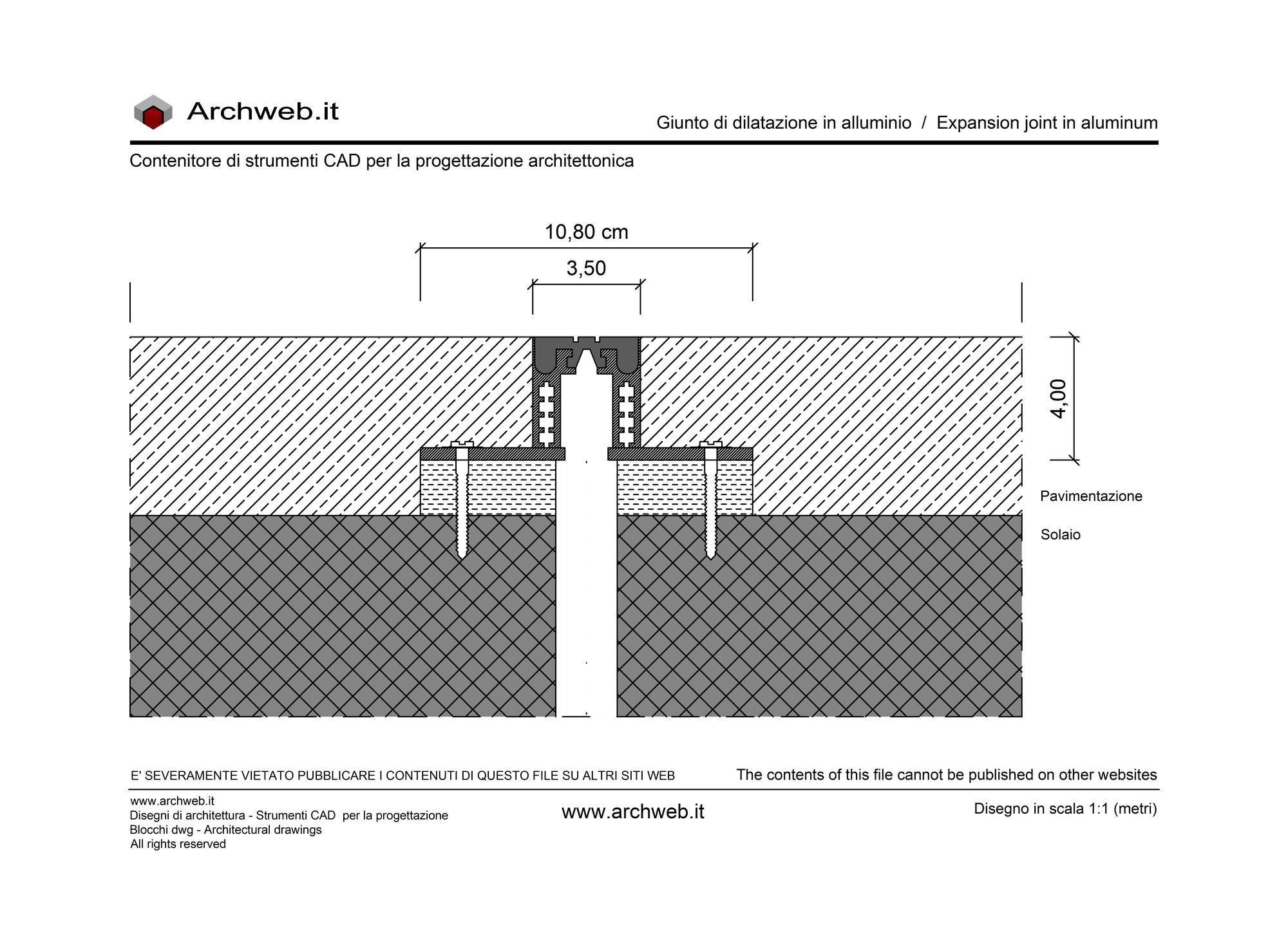
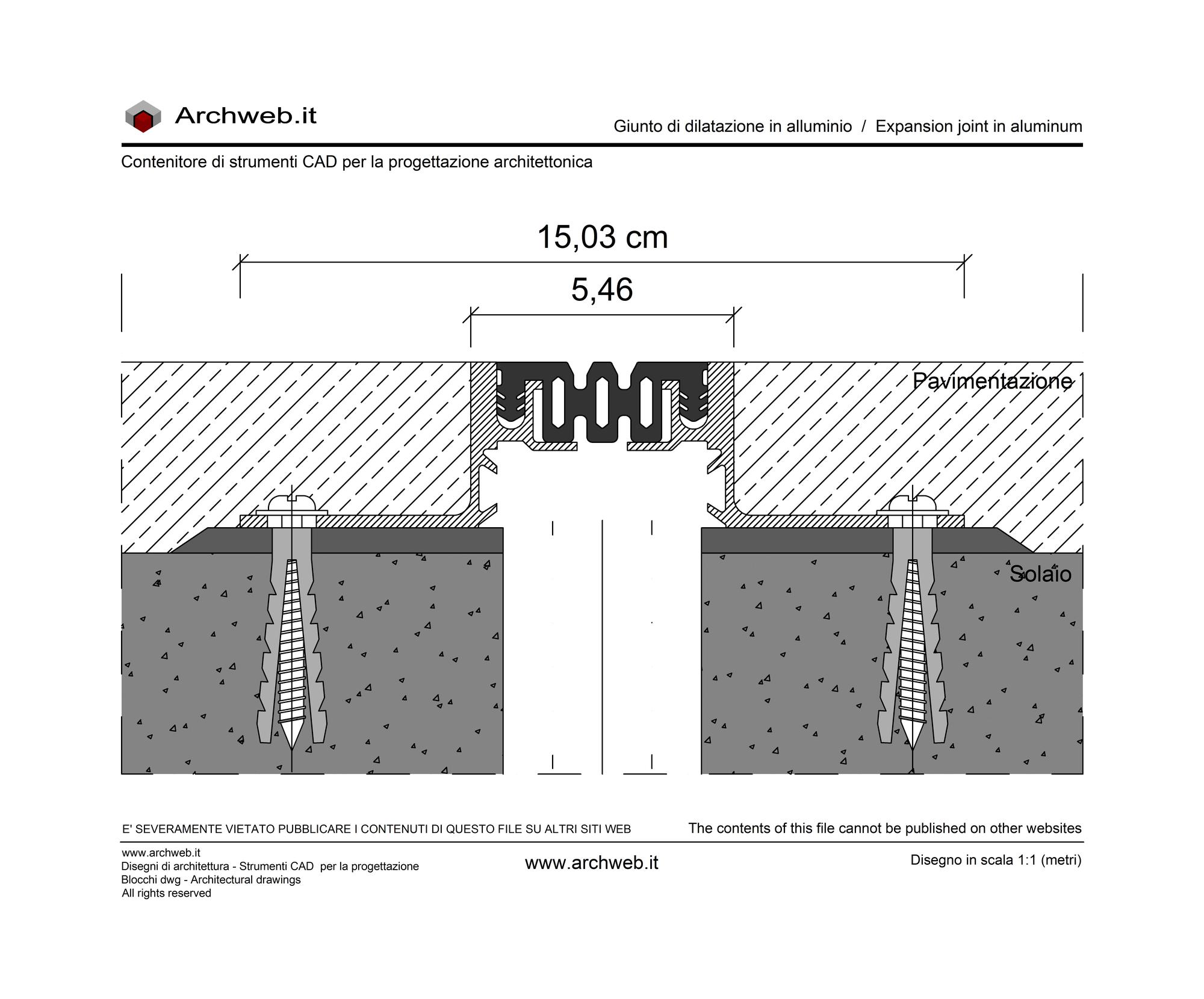
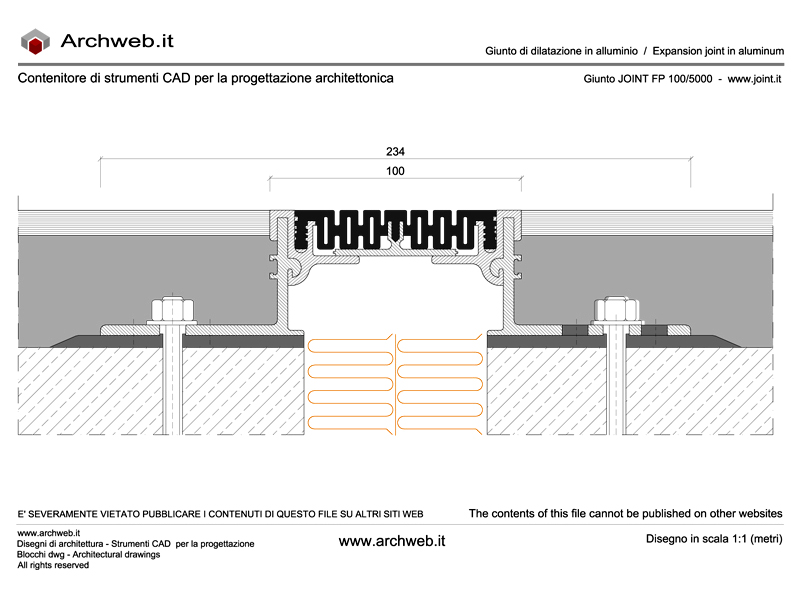
Expansion joints in construction are elements designed to allow the dimensional variation of a structure, compensating for expansions and contractions due to thermal variations, ground movements or other factors. These joints are inserted into various parts of the building, such as floors, walls, ceilings or structures, in order to prevent structural damage caused by excessive tension.
There are different types of joints used in construction – Read more:
.
Structural – Strategically positioned to allow the expansion and contraction of parts of the structure, such as foundations, walls, floors and ceilings. These joints are designed to support structural load while allowing movement.
Flooring joints – Used to separate sections of flooring to allow thermal expansion and reduce the risk of cracks or breakages. They can be made from materials such as rubber, metal or plastic and come in different shapes and sizes.
Wall joints – Used to separate horizontal or vertical walls to allow thermal expansion and prevent tension damage.
Ceiling joints – Similar to floor joints, but installed in ceilings to allow for expansion and prevent damage to the structure.
……………………………………………………………………………………………………
Expansion joints are an integral part of building design and construction, helping to preserve structural integrity over time and prevent costly damage caused by expansion or contraction forces. Their correct design and installation are essential to guarantee the good functioning of buildings over time.
Wide choice of files for all the designer’s needs.
Sort by
recommended cad block categories
How the download works?
To download files from Archweb.com there are 4 types of downloads, identified by 4 different colors. Discover the subscriptions
Free
for all
Free
for Archweb users
Subscription
for Premium users
Single purchase
pay 1 and download 1